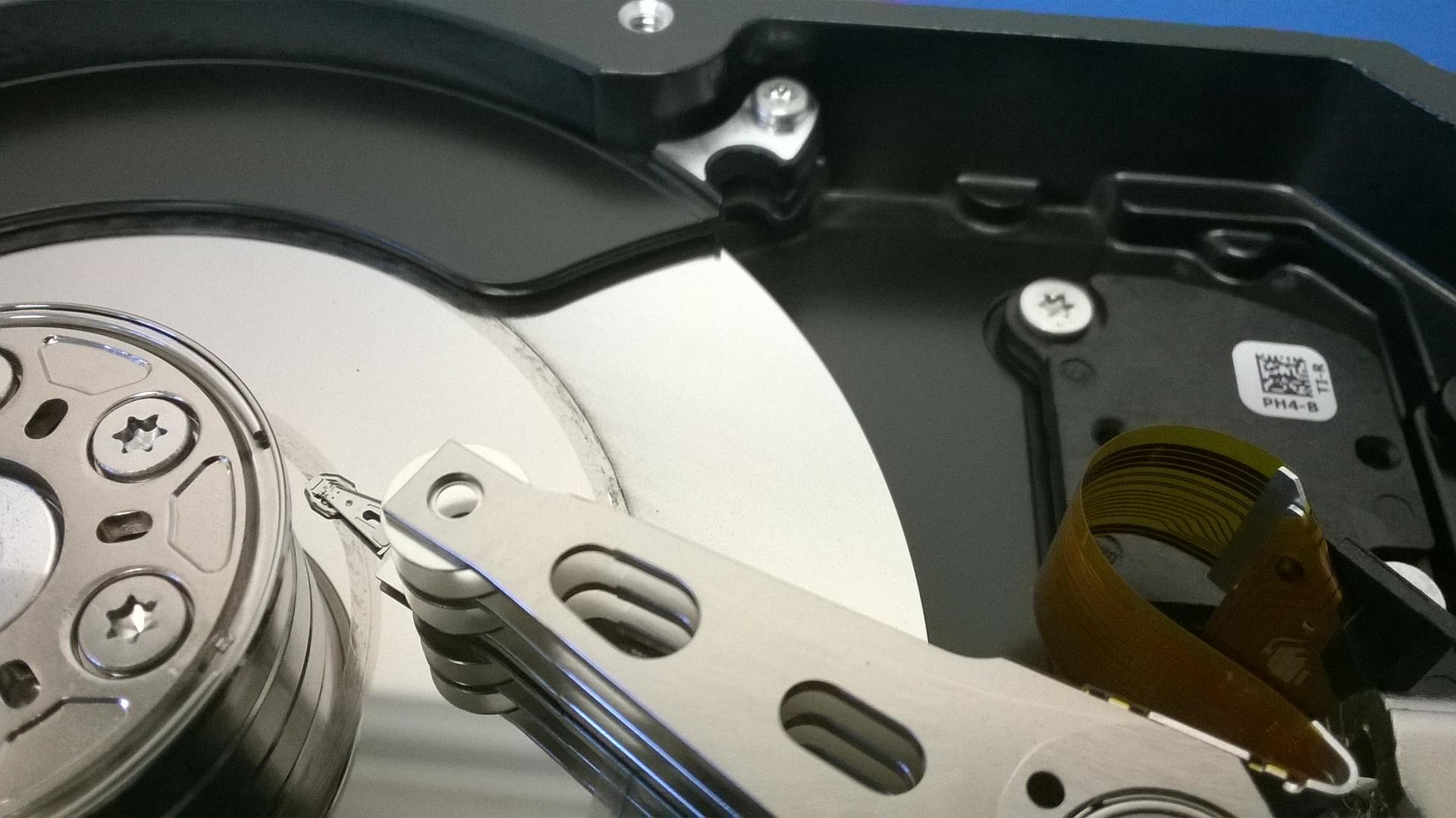
"Unrecoverable" doesn't always mean impossible.
It often means the first company lacked the equipment, specialist expertise, or resources required to complete a difficult recovery. We've successfully recovered data from 100+ drives that other labs declared unrecoverable.
Been told your data is gone forever?
If another data recovery company has examined your device and told you nothing can be done, you're probably feeling a mix of frustration, disappointment, and suspicion.
You might be wondering: Was that diagnosis accurate? Did they actually try? Should I accept this, or is there another option?
Those are reasonable questions. And the honest answer is: a second opinion is often worth pursuing.
We regularly recover data from devices that other companies have given up on. Not because we're magicians, but because we have different equipment, different expertise, and a different approach to difficult cases.
Why "Unrecoverable" Doesn't Always Mean Unrecoverable
When a data recovery company says your drive is unrecoverable, it can mean several different things:
Unrecoverable with their equipment
Not all labs have the same capabilities. An ISO Class 3 cleanroom, specialist firmware tools, and a deep library of donor parts make recoveries possible that simply can't be attempted in a less-equipped facility.
Unrecoverable at their price point
Some recoveries are technically possible but require significant time and expertise. If a company quoted a fixed price upfront, they may not be willing to invest the work required when the case turns out to be more complex than expected.
Unrecoverable without specialist knowledge
Certain failures — firmware corruption, complex RAID configurations, drives with proprietary encryption — require specific expertise that not every lab possesses.
Too difficult to be worth their effort
This is the uncomfortable truth: some companies look at a challenging case and decide it's not worth the time. They'd rather move on to easier, more profitable jobs. So they say "unrecoverable" when what they mean is "we don't want to do this."
What We've Recovered After Others Gave Up
These aren't hypothetical scenarios. These are real cases from our lab.
The 'unrecoverable' Seagate that took one day
A customer sent us a 1TB Seagate drive. Another company had opened it, examined it, charged her, and declared it unrecoverable. She sent it to us anyway.
We opened it in our cleanroom. No contamination. No physical damage. We patched the firmware, accessed the sectors, and cloned the entire drive.
The previous company had the drive in their hands. They just didn't have the capability — or the inclination — to solve the problem.
The RAID that 'couldn't be saved'
Two 1TB Toshiba drives from a RAID array. The first company opened both drives, charged the customer, and sent him away with "nothing we can do."
When the drives arrived at our lab, we found scratches on the platters and damage from failed heads. Real damage — not imaginary. But we spent a day swapping heads and chassis, working methodically through multiple attempts.
The customer was satisfied. He'd been told his data was gone forever.
The difference? We saw the same damage they saw. We just put in the work.
The fire-damaged drives everyone walked away from
Seven hard drives from a server room fire. The backup drives had literally caught fire. Multiple providers refused the case outright — understandably, given the severity.
We decontaminated each drive, worked through the smoke and heat damage methodically, and recovered the critical business data. It wasn't easy. It wasn't fast. But it was possible.
Why Second Opinions Matter in Data Recovery
Data recovery isn't like most services. You can't easily verify whether a diagnosis is accurate. You can't see inside the drive yourself. You're trusting someone's assessment of a situation you can't independently evaluate.
That creates an environment where some companies take advantage:
- •Declaring drives "unrecoverable" to avoid difficult work
- •Charging diagnostic fees for assessments that don't happen
- •Giving up quickly when cases don't fit their standard process
- •Lacking the honesty to say "we can't do this, but someone else might"
A genuine second opinion from a properly-equipped lab can reveal whether your data is truly lost or whether the first company simply couldn't — or wouldn't — recover it.
What Makes Our Assessment Different
When a drive arrives at our lab that another company has already examined, we approach it with fresh eyes and without assumptions.
We have the facilities
Our ISO Class 3 cleanroom is one of the highest-rated in the UK data recovery industry. Many recoveries that are impossible in lower-grade environments become achievable in ours. If your drive was opened elsewhere, we can assess whether contamination occurred and whether recovery is still viable.
We have the parts
We maintain thousands of donor components — heads, platters, control boards — catalogued and ready. Complex physical recoveries often require precise part matching. If the first company didn't have the right donor, they may have given up where we can continue.
We have the expertise
Our engineers have spent years working on cases other companies couldn't solve. RAID configurations that standard tools don't support. Firmware failures that require manual intervention. Physical damage that demands patience and precision. We specialise in difficult.
We have the persistence
Our business model is built around solving hard problems. We don't look at a complex case and think "this isn't worth our time." We look at it and think "how do we solve this?"
What We Need From You
If you're seeking a second opinion, here's what helps us give you an accurate assessment:
What you were told
Share the diagnosis from the previous company — what did they say was wrong? This helps us understand what they found (or claimed to find).
What was attempted
Do you know if they opened the drive? Attempted any repairs? Ran any diagnostics? Previous work affects our approach.
Any documentation
Reports, file lists, photographs, emails — anything the previous company provided can help us assess what actually happened.
The device itself
We need to examine it directly. No assessment is accurate without hands-on diagnosis in our lab.
Our assessment is free. If we can't improve on the previous diagnosis, you'll know — and you won't pay for that honesty.
If You've Already Been Charged
If the previous company charged you for a recovery they didn't complete — especially if they declared the drive "unrecoverable" before returning it — that's frustrating. We understand.
We don't get involved in disputes with other companies. Our focus is on one thing: can we recover your data?
But if we successfully recover data that another company said was lost, that recovery speaks for itself. It's evidence their diagnosis was wrong. What you do with that information — whether you pursue a complaint, request a refund, or simply move on — is entirely your decision.
Our job ends at the recovery. We'll document what we found and what we recovered, and you'll have the results in hand.
What Happens Next
- 01
Send us your device
Free collection from any UK address, or drop it at our Sheffield lab. If another company still has your device, you'll need to retrieve it first.
- 02
We examine it independently
Fresh assessment in our cleanroom. We'll tell you what we find — whether that matches the previous diagnosis or not.
- 03
Honest answer
If we can recover data they couldn't, we'll tell you what it will cost. If we agree the drive is genuinely unrecoverable, we'll tell you that too — and explain why.
- 04
You decide
No pressure. You'll have the information you need to make an informed choice.
Frequently Asked Questions
Common questions about getting a second opinion on your data recovery.
How often do you recover data that other companies said was unrecoverable?
Regularly. Our case files document 37+ drives that were declared unrecoverable by other labs and successfully recovered by us. That's not every case — some drives genuinely are beyond recovery — but it happens often enough that a second opinion is usually worthwhile.
Will previous work by another company make recovery harder?
Sometimes. If the drive was opened outside a cleanroom, there may be contamination. If heads were damaged during a previous attempt, that adds complexity. If the platters were scratched, some data may be permanently lost.
But "harder" doesn't mean "impossible." We've recovered data from drives with significant previous intervention.
What if you reach the same conclusion?
Then you'll have confirmation from a second, independent lab with specialist facilities. You'll know the diagnosis is accurate, not just convenient.
Our assessment is free — you don't pay for an honest answer, even if it's the same answer.
Do you charge for the second opinion assessment?
No. Assessment is free regardless of whether the drive has been examined elsewhere. You'll get a clear diagnosis and quote before any chargeable work begins.
How do I get my drive back from the other company?
Request its return in writing. They're obligated to return your property.
If they've charged you for work, you may want to document what they did (or claimed to do) before sending the drive to us.
What if the other company damaged my drive?
It depends what happened. If they caused damage through negligent work — opening the drive outside a cleanroom, mishandling heads, contaminating platters — that damage may reduce our chances of recovery.
We can assess what occurred and document it. Whether you pursue a complaint is your decision.
Get a Second Opinion
If another company has told you your data is unrecoverable, it's worth finding out whether that's actually true.
- 0800 999 3282Call us (free)
Tell us what happened and we'll advise on next steps.
- 07511 051360Emergency line
For business-critical situations requiring immediate response.
The assessment is free. The call is free. And if there's any chance your data can be recovered, we'll find it.
R3 Data Recovery Ltd — Recovering the Unrecoverable since 2004