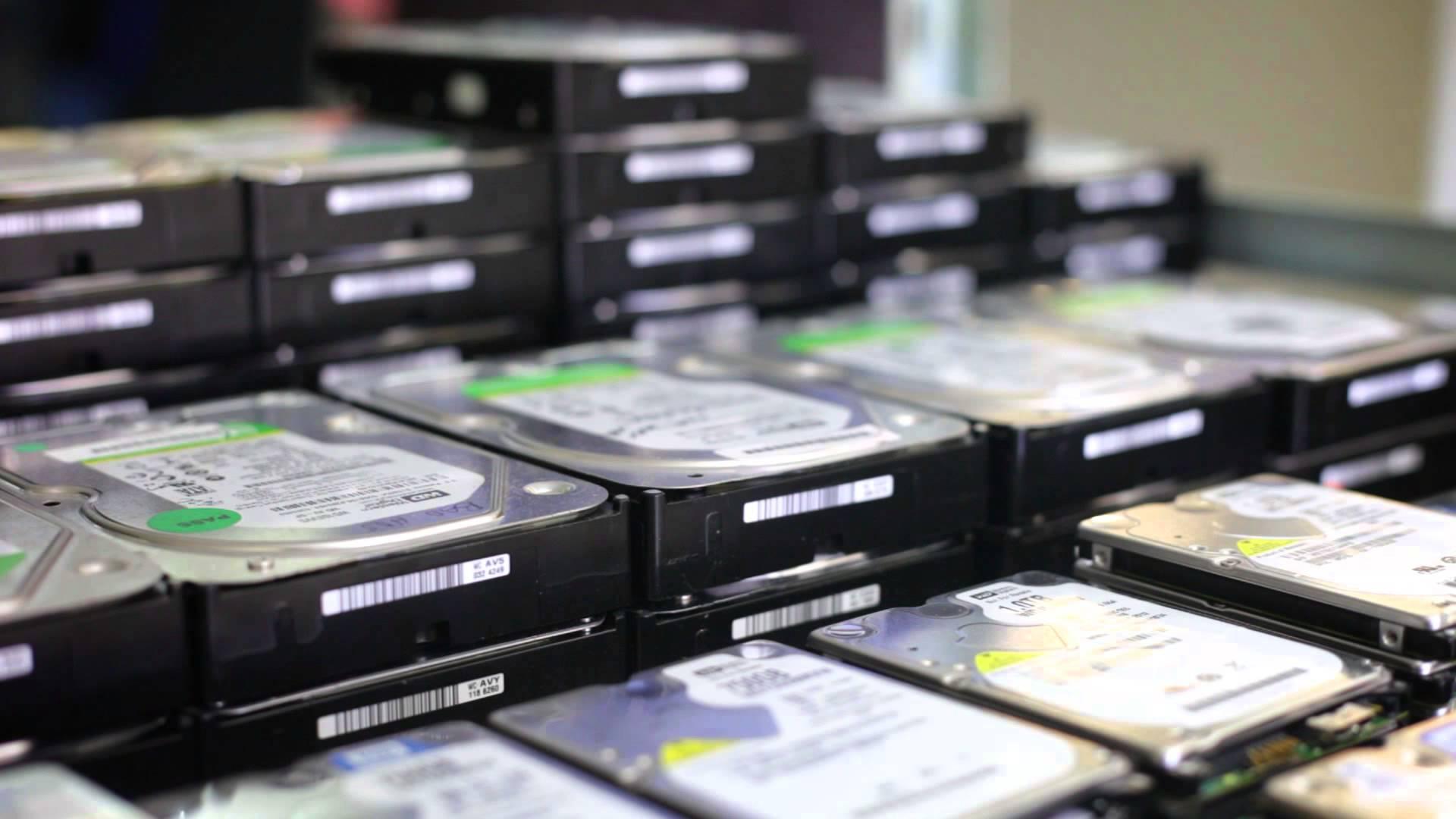
SSD Data Recovery Services
Professional SSD data recovery for failed, deleted, and corrupt solid state drives across SATA, PCIe, M.2, and NVMe.
- NAND-Level RecoveryChip-off capability
- All SSD TypesSATA, NVMe, M.2, PCIe
- No Data No FeeRisk-free assessment
What SSD Data Recovery Services Include
SSD data recovery is the fastest way to retrieve critical files when a solid state drive fails, shows errors, or stops being detected by your system. R3 Data Recovery works with all major SSD interfaces, from common SATA models to high-performance NVMe drives used in laptops, desktops, and workstations.
You can send your drive by courier or ask us to arrange collection. Our engineers carry out a structured diagnosis and explain the findings and recovery options in plain terms. You receive a clear recovery plan, realistic turnaround times, and agreed pricing before any recovery work begins.
Broad SSD Coverage
We recover data from SATA, PCIe, M.2, and NVMe SSDs, including Apple proprietary SSD storage and Intel Optane devices. Recovery methods are selected based on controller family, firmware behaviour, and NAND flash condition.
Complex Fault Handling
We handle controller faults, firmware corruption, power damage, unstable power rails, and NAND flash memory degradation. Each failure mode is assessed independently, as SSD faults often overlap.
Specialist Flash Recovery Techniques
Depending on the failure, we use controller-level access, ISP (In-System Programming), or chip-off NAND extraction. In NAND-based cases, data is reconstructed by analysing page structure, ECC behaviour, and controller translation patterns.
Business and Personal Support
We support business and personal recoveries, including RAID members, external USB SSDs, and mission-critical systems where controlled handling and predictable outcomes matter.
Clear Communication and Secure Handling
We provide regular status updates, handle all devices under ESD-controlled conditions, avoid unnecessary write operations, and return recovered data on secure media you choose.
Talk to an SSD recovery specialist
If you've lost access to critical data on a failed SSD, our engineers are available 24/7 to review your situation and advise on recovery options.
When SSD Recovery Requires Professional or Lab-Based Intervention
SSD data recovery is specialist work because SSDs distribute data across NAND flash memory using wear levelling, garbage collection, TRIM behaviour, and controller-managed mapping tables. These mechanisms make SSD recovery fundamentally different from HDD recovery and often unsafe for consumer software tools.
R3 Data Recovery focuses on SSD recovery services handled by experienced hardware and software engineers. We diagnose failures at board, controller, firmware, and NAND level, allowing us to recover data from modern NVMe designs as well as older SATA SSDs, including drives that do not detect in BIOS/UEFI or show repeated I/O errors.
We start with a structured, evidence-based diagnosis. This includes power rail verification, controller enumeration behaviour, firmware accessibility checks, and NAND read-error profiling. Recovery methods are selected based on observed electrical, firmware, and NAND-level behaviour—not assumptions.
Once the failure mode is confirmed, we build a recovery plan matched to the specific SSD model and fault type. Data is recovered to safe return media under controlled lab conditions, with the original SSD kept as stable as possible throughout the process.
You receive straight answers on what is fully recoverable, what is likely to be partial, and what may not be recoverable at all. We explain these outcomes before work begins. Eligible cases can proceed under our No Data, No Recovery Fee option.

SSD Failure Types That Cannot Be Fixed With Software
SSD data recovery has clear technical limits. Recovery is unlikely or impossible when:
- NAND blocks have been secure-erased or fully garbage-collected after TRIM
- The SSD controller has executed cryptographic key destruction
- NAND flash exhibits widespread unreadable pages beyond ECC correction limits
- A firmware-level secure wipe has completed successfully
These conditions are identified during diagnosis and explained clearly so you can make an informed decision before proceeding.
SSD Symptoms That Mean You Should Stop Using DIY Recovery Tools
SSD data recovery is required when software tools can no longer read the drive safely or when the SSD controller stops presenting data correctly. Continued use, repeated scans, or power cycling can significantly reduce recovery chances.
SSD Not Detected in BIOS or UEFI
The SSD no longer appears in BIOS, UEFI, or the boot device list. This commonly indicates controller failure, firmware corruption, or power faults on the PCB.
I/O Errors, Freezing, and Read Timeouts
Operating systems freeze during access, and logs show read errors or timeouts. This can result from NAND degradation, failing error correction, or controller instability under load.
Sudden RAW Volume or File System Corruption
Partitions appear as RAW, recovery tools show damaged metadata, or file system checks fail. On SSDs, file system corruption often coincides with firmware or translation table issues, making repair attempts risky.
Deleted Files That Do Not Reappear Due to TRIM
Deleted data may not be recoverable once TRIM marks blocks for cleanup. Recovery chances depend on how quickly the drive was powered down and whether further writes occurred.
Encrypted Volumes and Lost Access After Updates
BitLocker, FileVault, and hardware encryption add complexity. Recovery depends on whether encryption keys remain accessible within the controller or secure enclave. We do not bypass encryption; we recover encrypted data only when keys are intact and underlying data remains readable.
How SSD Data Recovery Works: From Diagnosis to Final Verification
SSD data recovery follows a controlled, traceable process designed to protect original media and maximise recovery accuracy.

- 1
Booking and Intake
You send the SSD or request collection, including a brief fault description and required priority.
- 2
Initial Diagnosis and Stabilisation
We inspect the device, confirm interface and controller type, verify power behaviour, and assess firmware and NAND health indicators.
- 3
Recovery Plan and Quote
We explain the recommended recovery route, expected results, turnaround time, and cost. No work proceeds without approval.
- 4
Specialist Recovery Work
Recovery is performed using controller-level access where possible. Severe cases move to NAND-based methods, with logical reconstruction based on observed data distribution and controller behaviour.
- 5
File Verification and Return
Recovered data is written to new return media. File lists are validated and sample files opened where practical before secure return.
SSD Recovery Success Rates: What Determines Whether Data Can Be Recovered
(Guidance Only)
| Failure Type | Expected Outcome |
|---|---|
| Logical or file system issues | High likelihood of recovery |
| Firmware or controller faults | Partial to high, device-dependent |
| NAND degradation or chip-off cases | Partial recovery common |
| Post-TRIM deleted data | Low and time-dependent |
Actual results depend on controller design, NAND wear level, encryption state, and write activity after failure.
SSD Brands, Controllers, and Form Factors We Can Recover
We support SSD data recovery across a wide range of manufacturers, accounting for differences in controller architecture and NAND behaviour:
- Samsung
- Crucial
- Kingston
- Western Digital
- SanDisk
- Intel
- Corsair
- Patriot
- OCZ
- SK Hynix
We also recover Apple proprietary SSD storage used in MacBook and iMac systems, as well as Intel Optane devices in selected business platforms.
How customers describe SSD recovery
Selected customer perspectives relevant to failed SSDs, degraded flash storage, secure handling, and the value of specialist recovery work.
- Rated 5 out of 5Verified
Kingston SSD degradation, computer shop failed, Spalding
“The company were very clear in explaining the process and quick to pick up my hard drive for analysis. Another firm said the files were not retrievable but R3 managed to recover all my data and I am extremely grateful.”
TimSpalding, United KingdomKingston SSD degradation, computer shop failed, SpaldingCustomer review from Reviews.io
- Rated 5 out of 5Verified
32GB SSD boot device, "simplest most efficient service"
“The simplest, most efficient service I have encountered. I didn't have any communication problems whatsoever and the turnaround time was quick. I can't fault this service at all.”
AnonymousSwindon, United Kingdom32GB SSD boot device, "simplest most efficient service"Customer review from Reviews.io - Rated 5 out of 5Verified
SanDisk SSD, "well orchestrated and secure"
“A total professional service which I highly recommend. From identifying the original problem to receiving the repaired product was extremely well orchestrated and secure.”
Tim GreenhowSanDisk SSD, "well orchestrated and secure"Customer review from Reviews.io
SSD Recovery Questions About Risk, Timing, and Data Safety
Common questions about our SSD data recovery services, process, and capabilities.
What Is SSD Data Recovery?
When Should I Stop Using My SSD?
Can You Recover Data from NVMe and M.2 SSDs?
Does TRIM Prevent Deleted File Recovery?
How Long Does SSD Data Recovery Take?
Do You Guarantee Recovery?
Specialist SSD Recovery Services
Get Your Free SSD Diagnosis
Our specialist engineers are ready to assess your SSD and provide an honest evaluation. No commitment required.
or call 0800 999 3282